
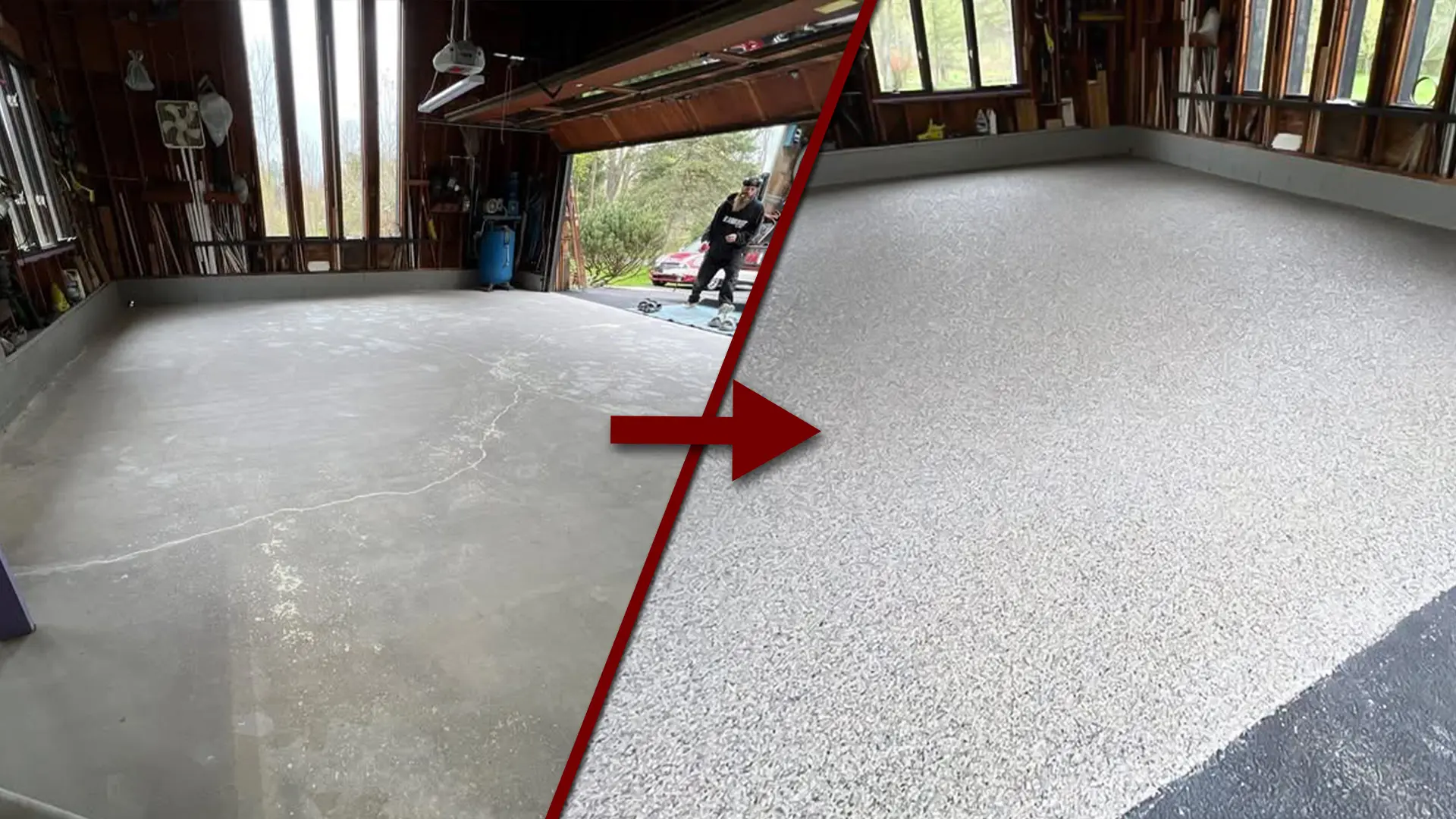
If you’re planning to upgrade your garage floor, it’s important to understand that not all coatings are built the same. Some look great at first but begin peeling, yellowing, or wearing down after only a few years.
A high-quality polyurea garage floor coating is designed to deliver better durability, stronger adhesion, and longer-lasting performance when installed correctly.
Here’s what you should know.
What Is a Polyurea?
A polyurea garage floor coating is a high-performance concrete coating made from a two-part material that cures quickly and forms a strong bond with the concrete surface. Compared to traditional epoxy, polyurea is more flexible, helping it resist cracking and impact damage over time, which makes it an excellent topcoat.
Many homeowners also hear the term “polyaspartic.” In simple terms, a polyaspartic is a slower-curing version of polyurea that gives installers more working time during application. Most coatings marketed as polyurea are actually polyaspartic coatings because they combine durability with a more controlled installation process.
What Are the Benefits?
A professionally installed polyurea garage floor coating offers several advantages for homeowners looking for a durable and low-maintenance garage floor.
Benefits include:
- UV protection (no yellowing over time!)
- Resistance to stains, chemicals, and abrasion
- Protection against hot tire pickup
- Low or no VOCs
- A high-gloss finish that’s easy to clean
- Strong adhesion that helps the coating last longer
Why Moisture Mitigation Matters
One of the biggest misconceptions about garage floor coatings is that polyurea alone prevents peeling. In reality, polyurea polyaspartics are not moisture mitigating. Moisture transmitting through the concrete gets trapped under the coating and causes it to delaminate, or peel.
That’s why a 2-day process that includes a moisture-mitigating epoxy primer is crucial. Garage Floor Coating of the Front Range uses mechanical concrete preparation along with a moisture-mitigating epoxy layer to help protect the bond between the coating and the concrete slab.
Upgrade Your Garage with a Polyurea Garage Floor Coating
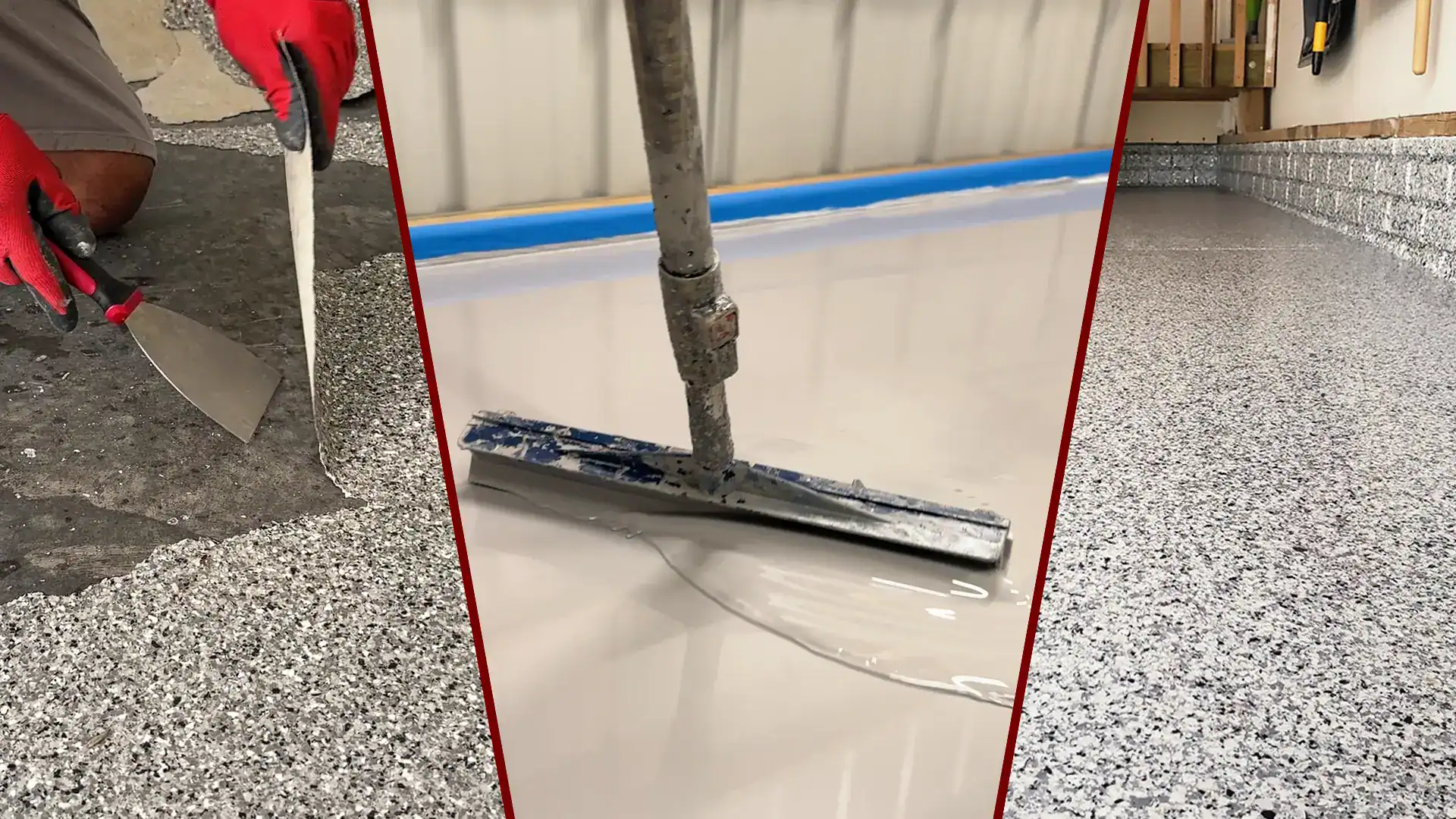
If you want a garage floor that looks better and lasts longer, proper installation matters just as much as the coating material itself. Our team installs premium coatings designed to resist peeling, wear, and moisture-related failure.
Contact Garage Floor Coating of the Front Range today to learn more about installing a polyurea garage floor coating built for lasting durability.
Frequently Asked Questions
Q: What is the best garage floor coating?
A: The best garage floor coating is a multi-layer system that includes a moisture-mitigating epoxy primer, full broadcast flakes, and polyaspartic topcoats.
Q: How long should a garage floor coating last?
A: A professionally installed system can last decades, while thin coatings may fail within a few years.