
Homeowners along Colorado’s Front Range often hear bold claims about polyaspartic flooring that oversimplify how professional garage floor coating systems actually work. In reality, long-lasting floors rely on multiple layers of coatings, each designed for a specific purpose. Let’s clear up a few common myths and explain how epoxy and polyurea-polyaspartic coatings work together.
Myth 1: Polyaspartic Flooring Should Be Applied Directly to Concrete
A frequent misconception is that polyaspartic coatings can be installed straight onto bare concrete. While a polyaspartic floor coating cures quickly and performs exceptionally at the surface, it is not recommended for direct to concrete application. Why? Because polyaspartics (polyureas) are quick-cure coatings; they cure so quickly (especially in the presence of moisture), they simply don’t have the time to deeply penetrate the concrete.
Concrete along the Front Range is especially prone to moisture movement due to temperature swings and seasonal changes. Without proper moisture mitigation, direct application of a thin, poorly-penetrating polyurea-polyaspartic as the base coat can lead to future peeling or blistering. That is why professional systems always begin with a moisture-mitigating epoxy primer.
Myth 2: Epoxy Is Unnecessary
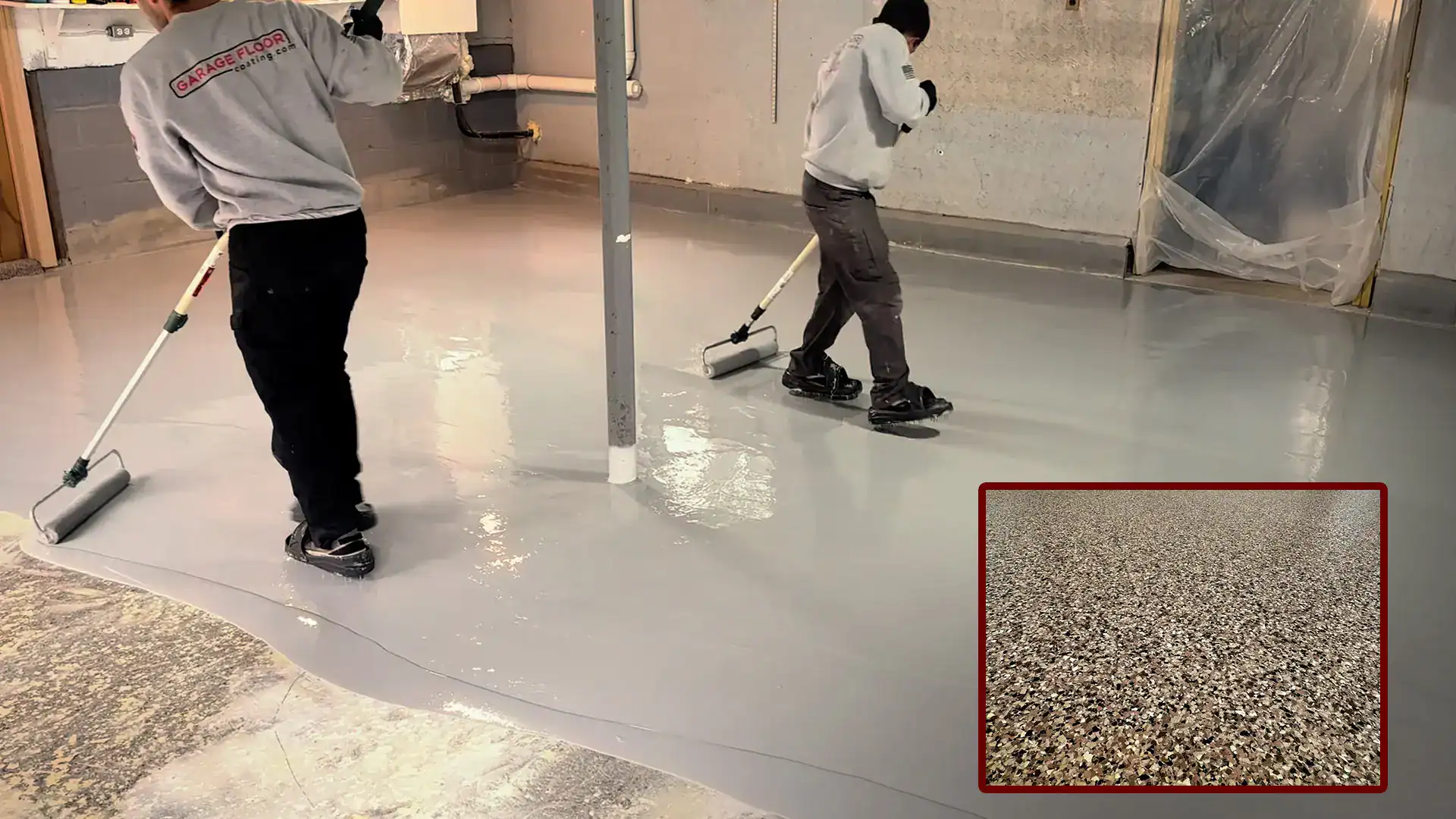
Another myth is that epoxy is an unnecessary addition. In reality, epoxy remains one of the most important components of a long-lasting garage floor coating. Epoxy can be applied thickly and bonds deeply to concrete, making it an ideal base coat and primer.
Epoxy floor coatings are also commonly used in indoor spaces where UV exposure is limited. While epoxy has lower UV resistance than polyaspartic products, its strength lies in creating a stable foundation beneath the surface.
Myth 3: Faster Installations Always Mean Better Results
Some homeowners assume a 1-day garage floor coating is always the superior option. In practice, the right timeline depends on concrete conditions. In most cases, a 2-day installation is necessary to allow moisture mitigation, proper curing (epoxies cure slower than polyurea-polyaspartics), and long-term adhesion.
Professionals evaluate moisture levels before deciding which approach is appropriate, rather than forcing every project into the same schedule.
Myth 4: Polyaspartic Flooring Is Only About Appearance
While polyaspartic flooring delivers a clean, finished look, its real value is performance. Polyurea-polyaspartic coatings provide excellent UV stability, chemical resistance, and protection against hot tire transfer, all critical for Front Range garages.
Visualize Your Options Before You Decide
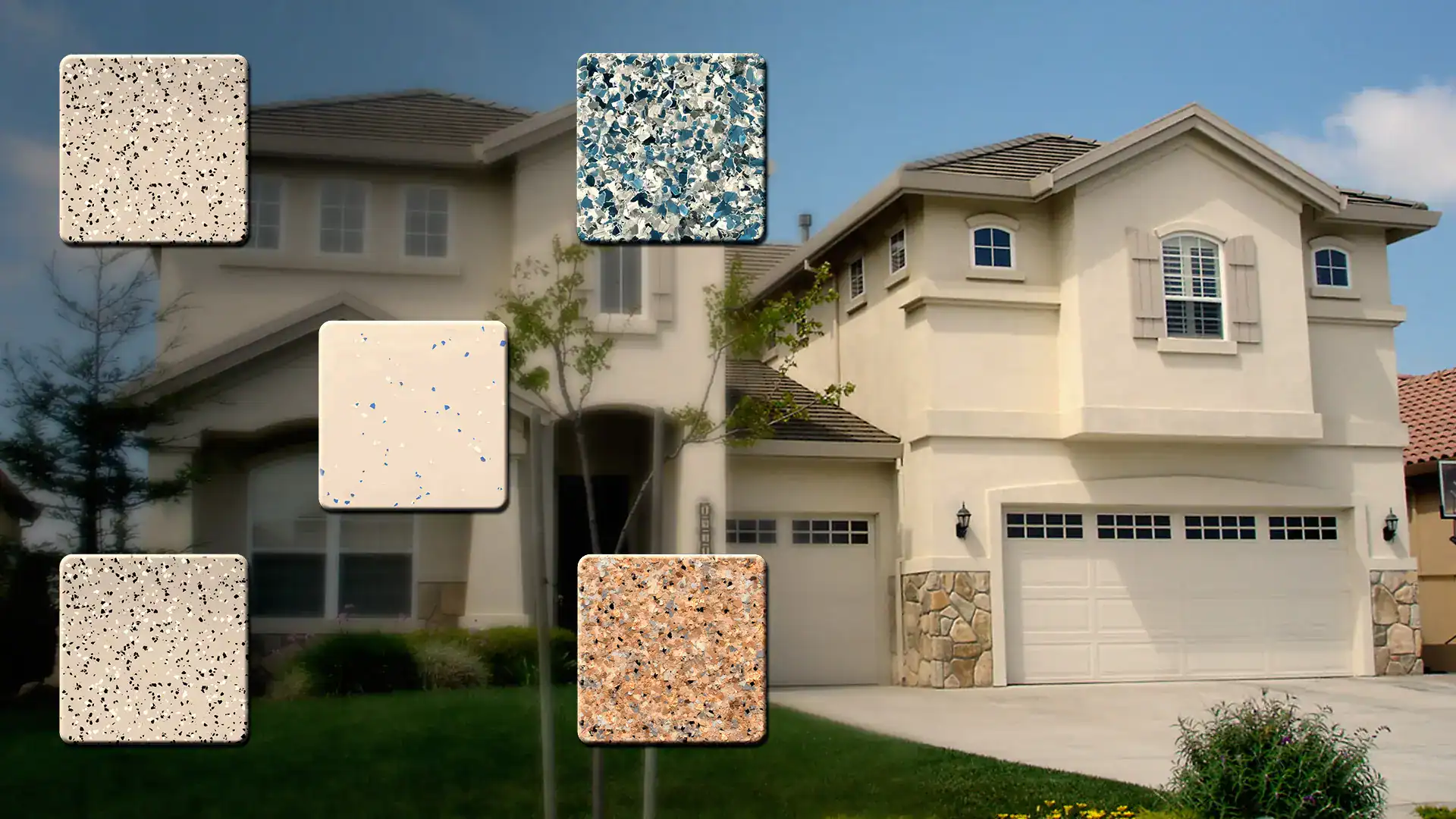
Garage Floor Coating of the Front Range offers a Live Coatings Visualizer, allowing you to preview colors and flake blends in your actual garage or home. It is an easy way to see how different polyaspartic flooring styles will look once installed.
If you are considering polyaspartic flooring for your Front Range garage, contact us to schedule a consultation and design a garage floor coating system built for real-world conditions and long-term performance.