
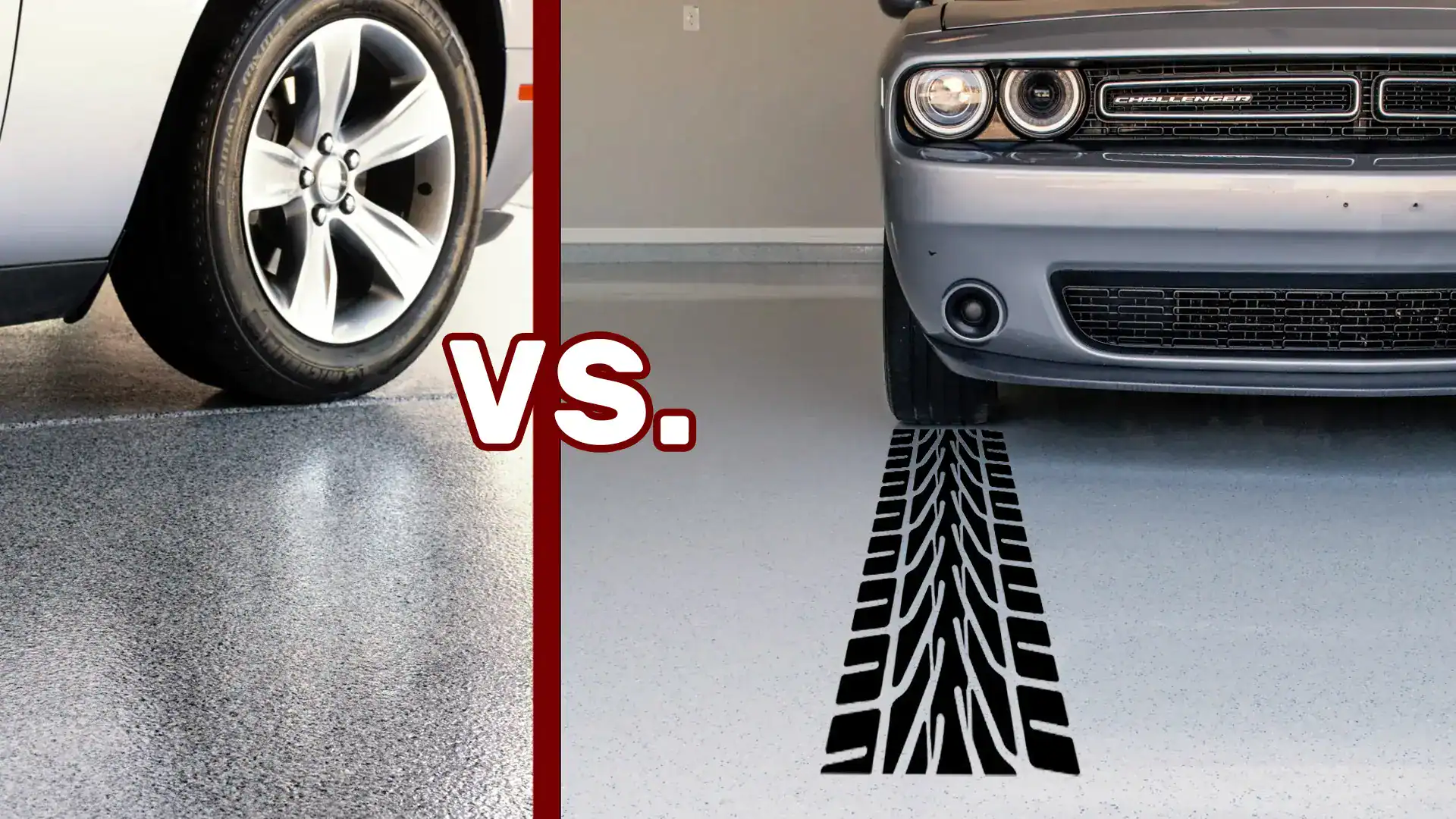
You just upgraded your garage floor. It looks flawless, like a finished extension of your home. But if it was installed as a quick 1-day system, that clean surface may not last long once your tires hit it. Hot tire transfer can begin the moment you park. A professionally installed polyaspartic floor coating is designed to prevent that kind of damage.
The Hidden Reaction Between Tires and Coatings
Many 1-day garage floor coatings rely on thin, quick-cure polyurea or polyaspartic coatings. They cure so quickly (in under an hour) that they allow for fast “1-day” results. However, they come with several potential issues.
First, they’re lousy direct-to-concrete coatings. They go down thinly (they’re not “high-build” coatings) and cure so quickly that they fail to deeply penetrate the concrete slab. The thin, poorly-penetrating polyurea-polyaspartic primer is thus susceptible to moisture-related damage.
Yet polyurea-polyaspartics can even be problematic as clear top coats if a lesser quality product is used. Less-than-100%-solids polyaspartics (with low cross-linking) can lead to staining from hot-tire transfer. Here’s how.
Car tires contain plasticizers that help maintain flexibility. As tires heat up during driving, these softening agents migrate to the tire’s surface. When parked, the plasticizers can transfer into the concrete coating beneath your tires. Over time, this leads to staining, tackiness, and eventual coating failure.
This is more likely if the polyaspartic used as of lesser quality. And remember, hot tire transfer is not just cosmetic. It is a sign the system is breaking down.
How a 2-Day Polyaspartic Floor Coating Prevents Early Failure
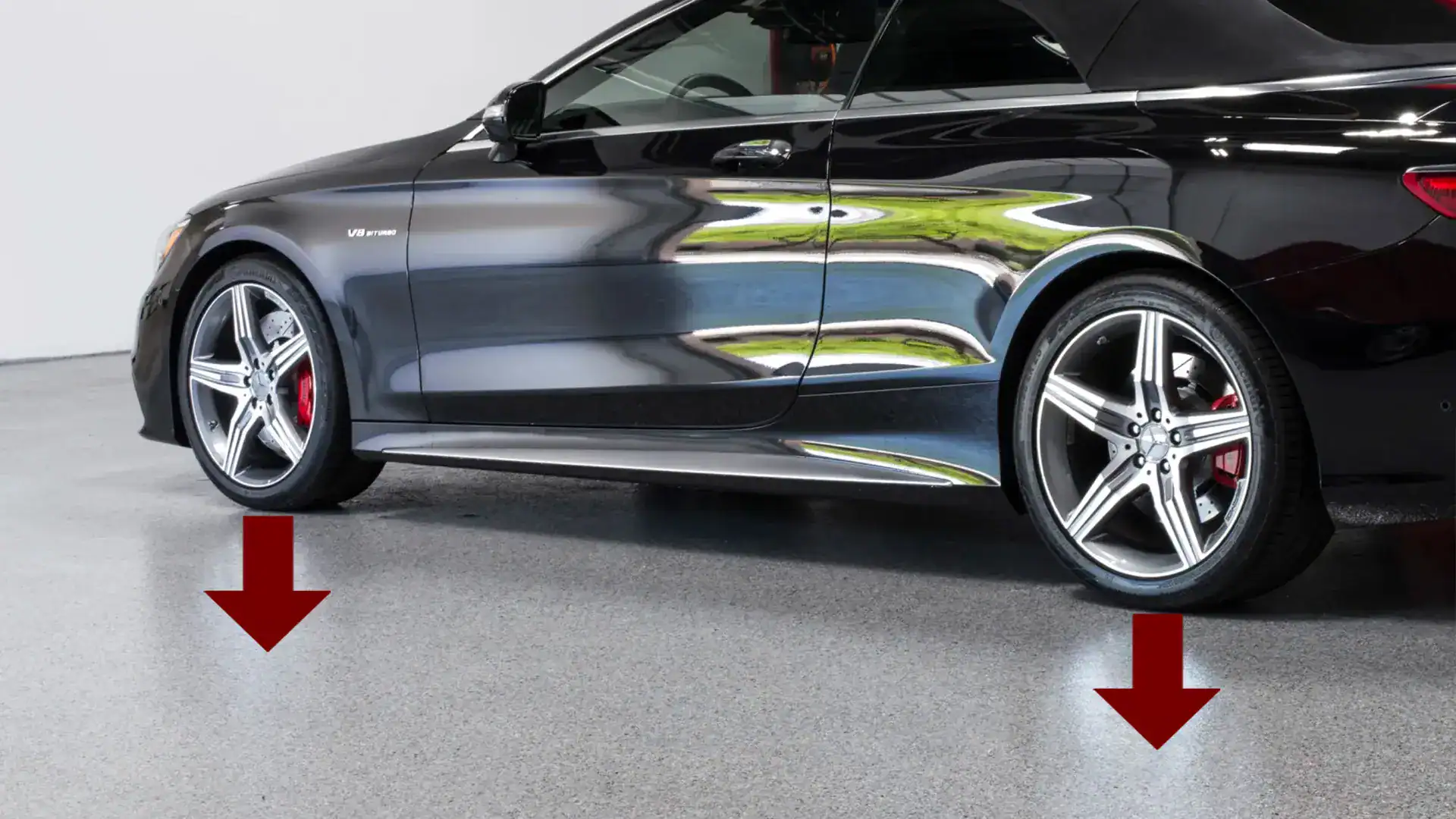
At Garage Floor Coating of the Front Range, we install hybrid epoxy and polyaspartic coating systems over two days using 100%-solids products for long-term performance.
Day one includes mechanical grinding to open the concrete and ensure adhesion of the primer coat. Then, a high-build, moisture-mitigating, 100%-solids epoxy primer coat is applied. A full flake broadcast (of the customer’s chosen blend) is embedded into this base layer. The primer (with flakes) are left to cure overnight for deep concrete penetration.
Day two is where our quality, highly-crosslinked polyaspartic coating comes into play. We apply not one, but two separate layers of this 100%-solids polyaspartic to create a tough, resilient surface that resists heat, pressure, and chemical exposure.
Built for Elevation, Sun, and Temperature Swings
A properly installed 100%-solids polyaspartic floor coating forms a UV-stable barrier that prevents hot tire pickup and maintains its appearance through Colorado’s changing conditions.
Without that level of protection, even a new garage floor can show wear sooner than expected.
Before you pull into your garage, make sure your coating is built to handle it.
Contact Garage Floor Coating of the Front Range today to learn more about a polyaspartic floor coating system that prevents hot tire transfer from day one.